Predictive Maintenance for Heavy Equipment
From reactive to proactive — how telematics transforms your maintenance programme.
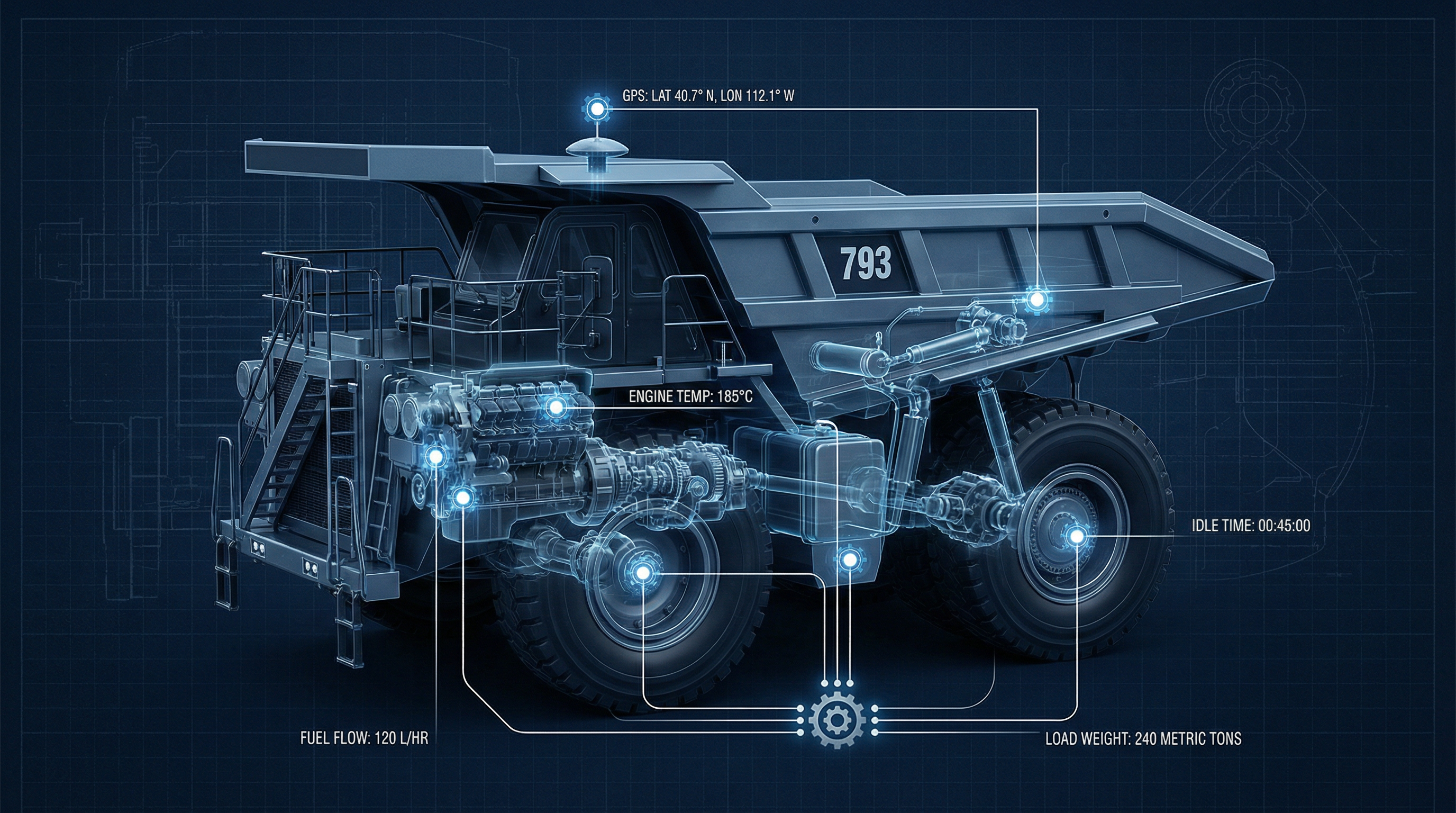
Reactive maintenance — fixing machines after they break down — costs 3–5 times more than planned maintenance. For heavy machinery operators in Australia and New Zealand, the difference between a reactive and proactive maintenance programme can be hundreds of thousands of dollars per year.
The Three Levels of Maintenance
Most heavy machinery operators sit somewhere on a spectrum from purely reactive to fully predictive maintenance:
Fix it when it breaks. Highest cost, highest downtime, lowest asset life.
Service on a fixed schedule (time or hours). Better than reactive, but often over-services some machines and under-services others.
Service based on actual machine condition data. Lowest cost, lowest downtime, longest asset life.
How CAN Bus Telematics Enables Predictive Maintenance
1. Accurate Engine Hour Tracking
The foundation of any maintenance programme is accurate engine hours. CAN bus telematics reads engine hours directly from the ECU — the same number your Cat or Komatsu dealer uses. This eliminates the inaccuracy of hour meter readings (which can be tampered with or fail) and GPS-estimated hours (which include idle time).
With accurate engine hours, you can schedule services at exactly the right interval — not too early (wasting money on unnecessary services) and not too late (risking damage from overdue services).
2. Automatic Service Alerts
Pacific Fleet Systems sends automatic service alerts when a machine approaches its service interval — typically at 90% of the interval (e.g., 450 hours for a 500-hour service). This gives your workshop team time to order parts, schedule the technician, and plan the machine's downtime without disrupting production.
Alerts are sent to the fleet manager, workshop supervisor, and machine operator simultaneously — ensuring nothing falls through the cracks.
3. Fault Code Monitoring
CAN bus telematics monitors fault codes in real time. When a fault code is logged on a machine's ECU, the platform sends an immediate alert — before the operator notices the warning light. This gives you the opportunity to investigate the fault before it becomes a breakdown.
Not all fault codes require immediate action — some are informational, some are warnings, and some are critical. Pacific Fleet Systems categorises fault codes by severity and provides plain-English descriptions, so your team knows exactly what action to take.
4. Condition Monitoring Parameters
Beyond fault codes, CAN bus telematics monitors key condition parameters that indicate machine health — coolant temperature, oil pressure, hydraulic temperature, DEF/AdBlue level, and battery voltage. Trends in these parameters can indicate developing problems before they trigger a fault code.
For example, a gradual increase in coolant temperature over several weeks may indicate a developing cooling system issue — long before the machine overheats and triggers a fault code. Catching this early allows a planned repair during scheduled downtime, rather than an emergency repair on a production shift.
Building a Predictive Maintenance Programme
Step 1: Establish Accurate Baselines
Start by recording the current engine hours and maintenance history for every machine in your fleet. This becomes your baseline — the starting point for all future service scheduling.
Step 2: Configure Service Intervals
Set up service intervals in your telematics platform based on manufacturer recommendations — typically 250, 500, 1,000, and 2,000-hour intervals for major services. Configure alerts at 90% of each interval.
Step 3: Implement Fault Code Response Procedures
Define a clear response procedure for fault code alerts — who receives the alert, what they do with it, and how quickly they need to respond based on severity. Without a defined procedure, fault code alerts become noise that gets ignored.
Step 4: Review and Optimise
Review your maintenance data quarterly — looking for patterns in fault codes, service costs, and unplanned downtime. Use this data to optimise service intervals, identify machines with recurring issues, and make informed decisions about asset replacement.
The ROI of Predictive Maintenance
For a 20-machine fleet, the annual saving from moving from reactive to predictive maintenance is typically $100,000–$300,000 — from reduced repair costs, lower parts costs (planned vs emergency), and eliminated lost production from unplanned downtime.
The cost of a Pacific Fleet Systems subscription for 20 heavy machinery assets is approximately $8,400/year. The ROI is typically 12–35x in the first year — making it one of the most straightforward investment decisions available to heavy machinery operators.
Get Started
See it working on your fleet.
Book a 15-minute demo. No commitment, no sales pressure — just live data from your asset types.